
Remembering US War on Iraq: Two Decades Post-Invasion
Updated: Oct 19
Dr Anish K
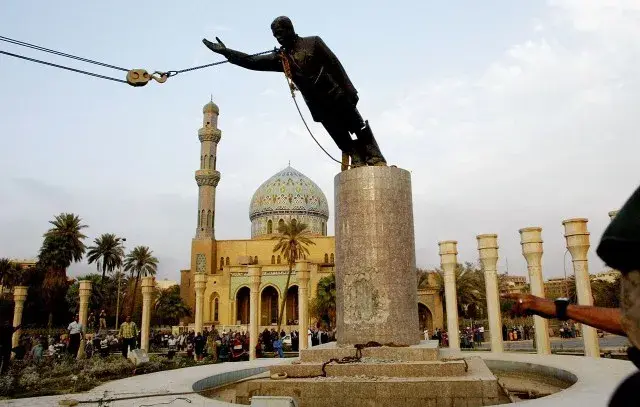
The US-led invasion and destruction of Iraq was a stark reminder and a warning for all of us to see the effects of an imperialist war. Over these long 20 years, Iraq has witnessed numerous unusual events. At the time, the US put forth several claims to justify its attack on the Saddam regime. The State Department under President George Bush described the invasion as a 'War against Terror,' a 'Just War,' against an ‘Axis of Evil’ and a 'Global Democratic Revolution,' among other terms. One of the objectives of the US-led occupation was to dismantle Saddam Hussein's authoritarian regime and establish a democratic government in Iraq. However, the decisions made by the US immediately following the regime's removal have served to highlight the fact that the claims of democracy and freedom were mere rhetoric employed to justify an illegal invasion of a sovereign country.
Iraqi State and Society
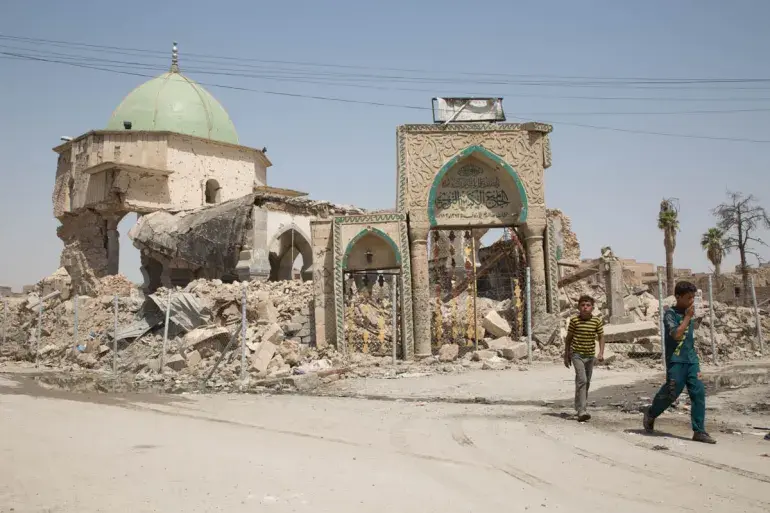
Contemporary Iraq showcases profound diversity in languages, religions, ethnic groups, cuisines, rituals, and ideological orientations due to its history of multiple autonomous power centres and varied economic activities. The population of Iraq consists of approximately 60 per cent Shia Arabs, 20 per cent Sunni Kurds, and 20 per cent Sunni Arabs, as well as smaller yet influential communities of Turkman and Assyrian Christians, and a small Jewish minority. Iraq's nation-state building can be categorized into different periods: Ottoman, Mandate, Republican, and Ba'ath, reflecting the complex and deeply divided nature of Iraqi society in terms of ethnicity and religion throughout the country.
During the Ottoman period, Iraq was part of the Ottoman Empire and lacked independent existence. It was divided into three administrative provinces: Baghdad, Mosul, and Basra. After the collapse of the Ottoman Empire during World War I, Iraq came under British and French mandates. In 1921, Iraq gained independence and became a kingdom under Faisal I, a Hashemite prince. The Hashemite dynasty ruled until 1958 when a military coup led by Abdul Karim Qasim established a republic. In 1968, the Ba'ath Party, led by Saddam Hussein, seized power. Saddam's regime was marked by authoritarianism, centralization, human rights abuses, and conflicts such as the Iran-Iraq War and the invasion of Kuwait. In 2003, a US-led coalition invaded Iraq, resulting in Saddam's capture, trial, and execution in 2006.
Invasion and its Aftermath
Given the context, a crucial question arises: What are the consequential impacts of the United States' occupation of Iraq? As we know, the coalition forces that invaded in 2003 toppled the regime of Saddam Hussein. However, the US had intentions beyond a mere regime change, consciously dismantling the existing political institutions and systems. They implemented a 'De-Ba'athification' process, which included banning the Ba'ath Party and disbanding the Army and other security apparatuses. Among these, the Iraqi Army, which symbolized national unity and enjoyed widespread respect, was destroyed. This destruction of the state in Iraq would later contribute to insurgency and ethno-sectarian violence.
The newly established 'so-called democratic' government failed to address the structural-functional weaknesses of the state. This implies that the undemocratic and authoritarian nature of the Iraqi state under Saddam implicitly continued with the post-invasion regime in Iraq. The present democratic system in Iraq can be seen as a result of compromises and adjustments between different sects and religious groups. However, the new American democracy failed in Iraq miserably and it resulted in a bloody internecine sectarian violence between communities.
Exporting American Democracy or Imperialism Plain and Simple
Insofar as the US' so-called democratization efforts, it attempted to impose a set of political rules on Iraq that did not reflect the dominant culture or power dynamics among political forces. Moreover, the democracy established in Iraq, albeit procedural, was not the result of natural political development within the society but rather forcefully introduced through a bloody military invasion and occupation. It was based on the interests of the occupying power rather than an outcome of domestic politics. As a result, the new political elites in Iraq generally lack legitimate claims to the country's political developments.
Additionally, the collapse or deliberate weakening of the Iraqi state and the rule of law, foundational elements of democracy, have been exacerbated by US policies. Consequently, these internal efforts and external interventions have contributed to problematic characteristics in Iraq's post-Saddam politics, including ethno-sectarian politics, ethnic separatism, the Islamisation of society, the pursuit of revenge against political opponents, the marginalization of women and minorities, the politics of victimization, and an autocratic nature in the government. Furthermore, Iraqi democratization faces two significant challenges: ethnic fragmentation (Arab-Kurd) and sectarian divisions (Shia-Sunni), which are interconnected in broad terms.
The US-led occupation began with catchphrases such as 'War against Terror,' 'Just War,' ‘Axis of Evil,’ and 'Global Democratic Revolution.' However, these terms served merely as justifications for the military occupation. Upon closer examination, it becomes evident that there were numerous undisclosed reasons behind targeting Iraq (after Afghanistan) immediately after the September 11 twin tower attack in the United States. The strategic position of Iraq in the West Asian region, its large oil reserves, and the desire to neutralize a potential enemy to Israel are some undisclosed strategic reasons for the occupation. These notions were developed and introduced by neoconservatives both inside and outside the US administration, as they had their strategic calculations in the region, where the US plays a critical role. Consequently, Iraq became the target of the US-led invasion.
An Uncertain Future
In conclusion, the events that unfolded in Iraq after the invasion cannot simply be interpreted as the failure of US-led democratization. In reality, the US lacked a genuine plan for democracy in Iraq and instead pursued its strategic interests in the region. Ultimately, it is evident that the ongoing crisis, conflicts, and violence in Iraq are consequences of the US-led invasion. Moreover, the invasion once again proved that the rule-based order in international relations is always threatened by powerful states, such as the United States.
The United Nations became toothless and ineffective in checking the US to manipulate its platform. The most staggering aspect of this tragedy is that neither President Bush nor his hawks were made accountable for the human tragedy in Iraq. Why can't Bush be trialled as a war criminal? Many Iraqis started demanding reparations and accountability for the destruction of their state and society. If President Bush can wage a war on flimsy grounds and freely leave without any accountability, why can't Russian President Putin do the same? Imperialist wars are always fought on a heap of lies. And such lies have a human cost as we witness in the destruction of the modern state of Iraq and society.


Comments